
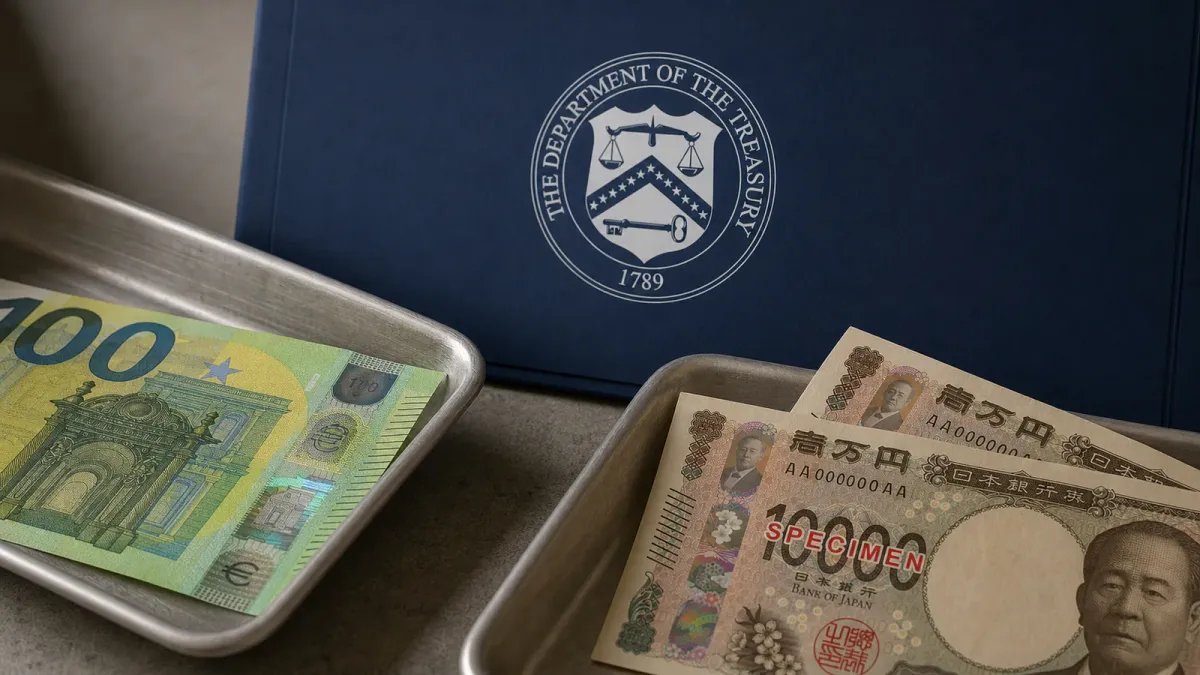
The U.S. Treasury reportedly entered the foreign-exchange market on Friday, July 31, to support Japan’s battered currency, with the Federal Reserve Bank of New York selling euros and buying yen on the Treasury’s behalf. If confirmed in official records, it would be the first U.S. purchase of yen to strengthen the currency since 1998.
The operation is significant less because of its still-undisclosed size than because of the signal it sends: Washington was willing to put money behind warnings that the yen’s slide had become excessive. The Treasury and New York Fed had not publicly confirmed the trade as of Saturday, August 1, so the exact amount, timing and funding source remain open questions.
The market reaction was immediate. The dollar fell to about 157.6 yen shortly before 5 p.m. Eastern on Friday from roughly 158.9 less than an hour earlier, according to LSEG data cited by Reuters. The dollar had recently approached 164 yen, its strongest level against the Japanese currency since 1986.
What reportedly happened
The Financial Times, citing three people familiar with the matter, reported that the New York Fed sold euros to buy yen for the Treasury through Goldman Sachs and Morgan Stanley. The report did not disclose how much yen was purchased.
Earlier Friday, the Treasury told several major banks that it might intervene and that they should stand ready for future action, Reuters reported. A Reuters photograph taken during a Cabinet meeting at Camp David also showed Treasury Secretary Scott Bessent’s notepad with a line referring to buying $5 billion to $10 billion worth of yen. That note supported the intervention signal, but it does not establish the amount actually traded.
Japan was also widely believed to have bought yen on Thursday after the currency rebounded sharply. Analysts using central-bank data and broker estimates put that Japanese operation near ¥8.45 trillion, or about $52.8 billion, according to the FT. Japan’s Finance Ministry publishes monthly totals and later releases daily details; its current calendar indicates the next monthly release covering late July is due August 28.
How the trade works
The New York Fed executes foreign-exchange operations for the Treasury’s Exchange Stabilization Fund. Its official description says the trading desk can sell one currency and buy another when directed by Treasury, typically to counter disorderly conditions or signal that an exchange rate no longer reflects fundamentals.
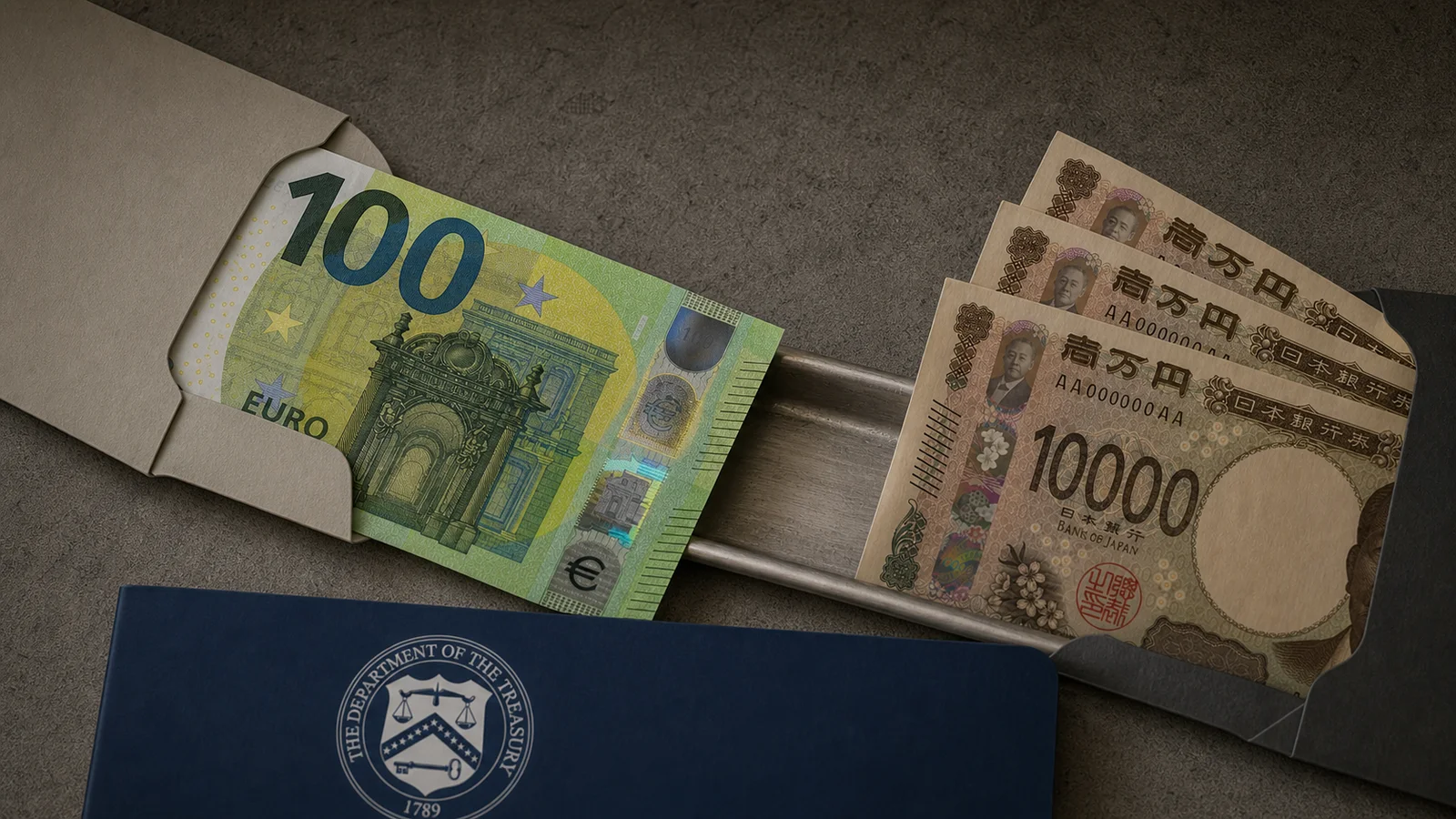
In this case, selling euros for yen directly increased demand for the Japanese currency. Dealers then adjust related euro-dollar and dollar-yen prices through arbitrage, so the effect can spread across the broader market even without the United States selling dollars in the initial transaction.
This is not an interest-rate change, a currency peg or a guarantee that the yen will keep rising. It is a market purchase designed to change the immediate balance of supply and demand—and to make traders think twice before continuing a one-way bet against the yen.
Why Washington stepped in
A very weak yen raises Japan’s cost of imported energy, food and raw materials, worsening household inflation. It also reflects the gap between U.S. and Japanese interest rates, which has encouraged investors to borrow cheaply in yen and buy higher-yielding assets elsewhere.
The Bank of Japan held its policy rate at 1% this week while signaling that inflation risks could justify further increases. That message helped the yen, but it did not erase the underlying rate gap. Intervention can buy time for monetary policy to catch up; it cannot substitute for lasting changes in inflation, interest rates or trade flows.
Washington also has a financial-stability interest. A rapid yen decline can force abrupt reversals in leveraged “carry trades,” while repeated Japanese intervention may require sales of reserve assets. The U.S. action adds credibility to Tokyo’s warning without proving that either government can set the exchange rate indefinitely.
What it means for travelers and investors
For Americans planning trips to Japan, a stronger yen means each dollar buys fewer yen, making hotels, meals and rail travel more expensive in dollar terms. The move from 164 to 158 yen per dollar, for example, reduces a dollar’s yen purchasing power by roughly 4%, though exchange rates can reverse quickly.
For companies, a sustained stronger yen can raise the dollar price of Japanese exports while improving the overseas purchasing power of Japanese businesses and consumers. For markets, the more immediate risk is volatility: traders who borrowed yen may have to unwind positions rapidly if the currency strengthens further.
Readers should not treat the intervention as a personal buy-or-sell signal. The Bank for International Settlements measured global foreign-exchange turnover at $9.6 trillion per day in April 2025. Even a multibillion-dollar official trade is small beside that market and works mainly through surprise, coordination and credibility.
What to watch next
The first test is official confirmation. Treasury and the New York Fed report foreign-exchange operations on a lag, while Japan’s Finance Ministry will publish its late-July total on August 28. Any joint U.S.-Japan policy statement, further bank instructions or another sharp currency move would provide earlier clues.
The second test is whether economic policy reinforces the intervention. If the Bank of Japan continues raising rates while U.S. rates ease, the yield gap could narrow and give the yen more durable support. If that gap remains wide, speculators may eventually test the authorities again.
The bottom line: the reported U.S. purchase changes the credibility of Japan’s defense, not the fundamental math behind the yen. It can stop a rush, punish one-way bets and buy time. Whether it marks a durable turn depends on what Tokyo and Washington do after the surprise trade.


