
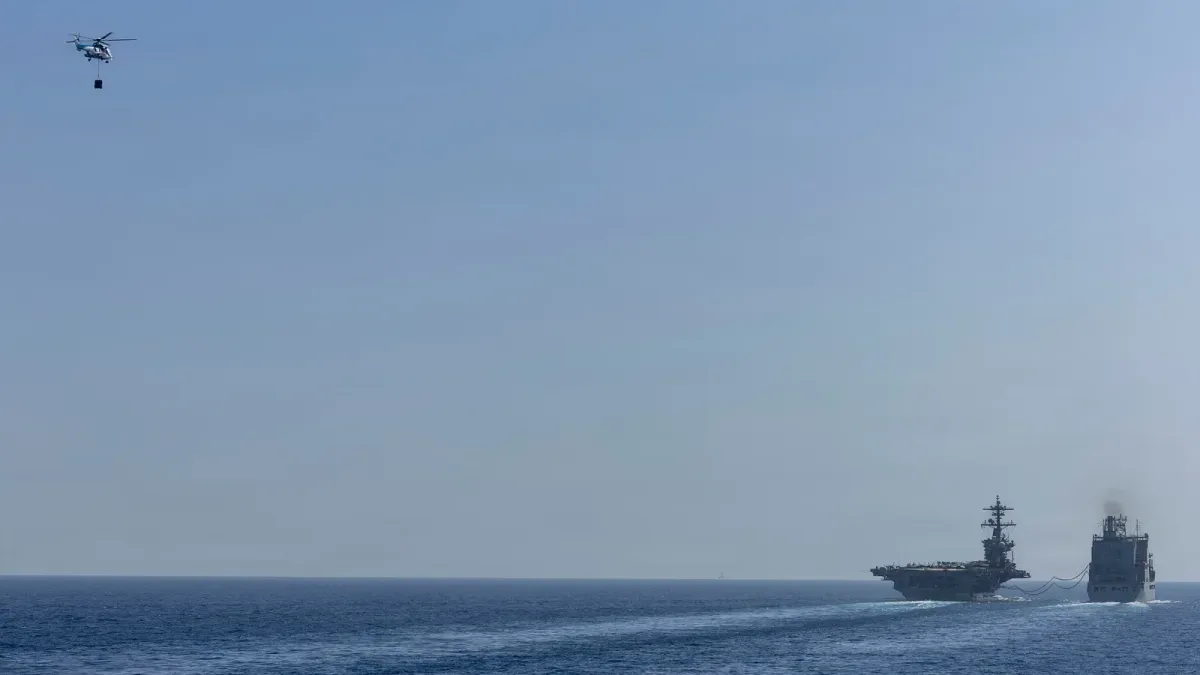
USS George Washington is now operating in the Middle East to relieve USS Abraham Lincoln, giving roughly 5,000 sailors and Marines a path home after a deployment that lawmakers said had passed 265 days. The short answer to the question driving new interest in the ship is that a nuclear-powered carrier can keep moving without frequent fuel stops, but its people, aircraft, food stores, repair parts and support systems still depend on a large and precisely timed logistics network.
The relief is therefore more than a ship swap. It transfers an active mission to a fresh carrier and crew while Lincoln begins a return trip that the Associated Press reported could take just over a month. It also brings renewed attention to reports of food and hygiene shortages, plumbing trouble, crew stress and mental-health emergencies aboard Lincoln—claims Defense Secretary Pete Hegseth has said were misrepresented.
What is confirmed is narrower but consequential: U.S. Central Command said George Washington arrived in the region on Wednesday, August 19; Lincoln’s deployment approached nine months; and lawmakers from both chambers have demanded detailed answers about conditions, readiness and the crew’s return timeline. The precise homecoming date and whether Lincoln will make a port call on the way remain publicly unresolved.
The short answer
A nuclear reactor solves the propulsion-fuel problem. It does not feed thousands of people, replace a broken pump, restock medicine, move mail, maintain aircraft or give an exhausted crew time with family. Those needs are met through underway replenishment, port access, maintenance planning and, eventually, relief by another ship.
The Navy describes underway replenishment as the transfer of consumables while ships remain at sea. Fuel, food, ammunition, spare parts and personnel can move from a support ship to a carrier without either vessel entering port. That capability lets a carrier stay on station for long periods, but it is not the same thing as being self-sufficient.
How a carrier is resupplied at sea
There are two main methods. In connected replenishment, ships travel side by side and use tensioned lines and transfer gear to move fuel and cargo. In vertical replenishment, helicopters carry pallets between ships. Both require favorable operating conditions, trained crews, working equipment and detailed coordination.
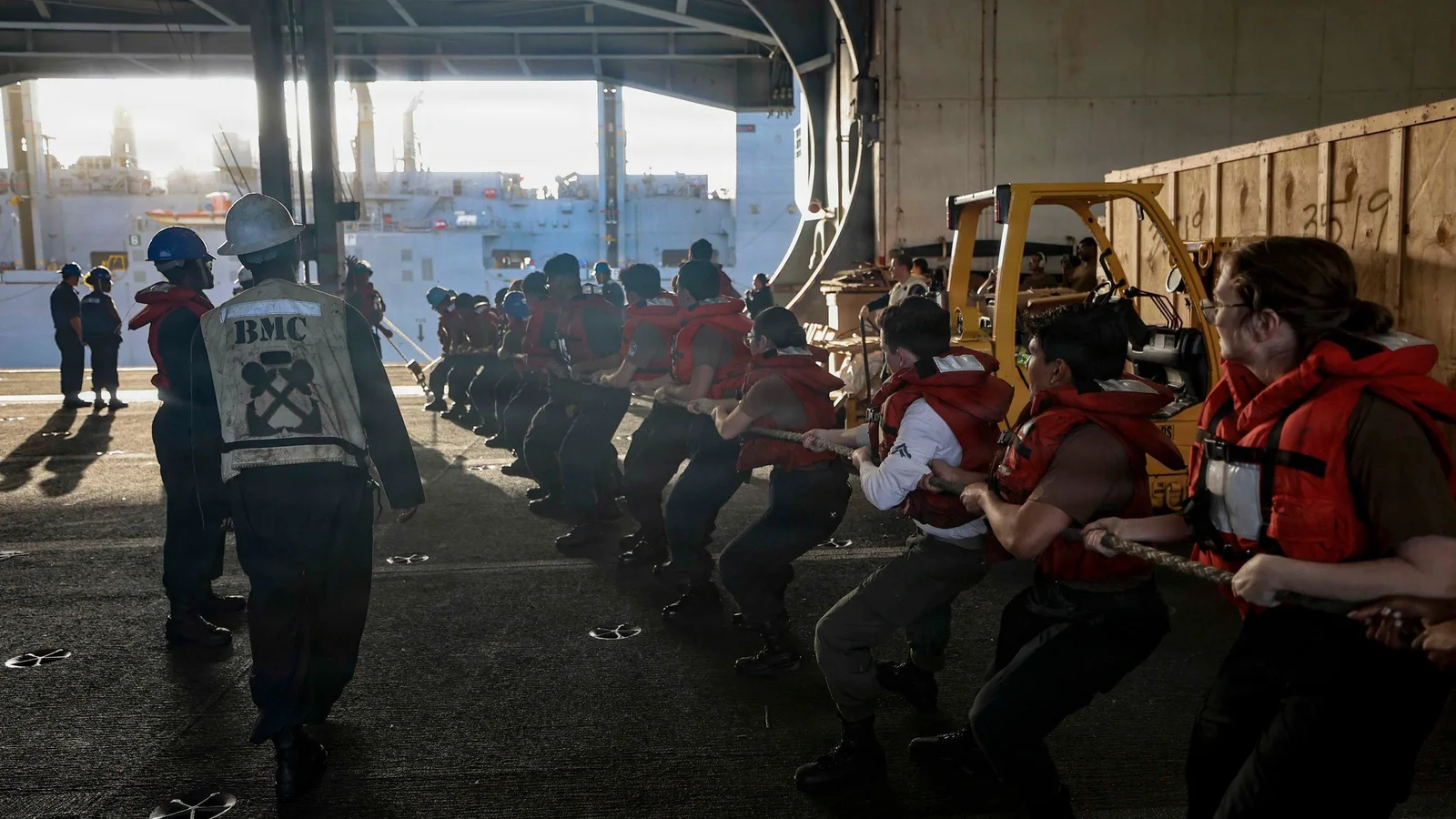
An official Navy account of Lincoln’s own supply operation said planning for a replenishment can begin up to two weeks in advance. Divisions submit orders, support ships obtain approved supplies, and crews organize the sequence for loading and storage. The same account said the carrier was expected to hold enough food for at least 45 days and that a large replenishment could involve 600 to 700 pallets and take 10 to 15 hours from preparation through storage.
That scale explains why a shortage cannot always be fixed by sending one helicopter. A carrier’s logistics are a chain: vendors, ports, Military Sealift Command ships, aviation assets, sea conditions, security requirements, deck crews, elevators, storerooms and galley staff all have to work together. Missing or delaying one replenishment can force later deliveries to grow and can narrow the margin for fresh food, hygiene supplies or parts.
What the relief changes now
George Washington’s arrival allows the Navy to maintain its Middle East carrier presence while releasing Lincoln from the mission. It does not mean Lincoln’s crew will be home immediately. The ship still must transit back toward San Diego, and the Navy has not publicly provided a precise arrival date.
Relief also shifts strain rather than erasing it. George Washington is based in Japan, and its movement leaves the Indo-Pacific without a U.S. carrier strike group for the moment, according to the AP. USS George H.W. Bush remains in the Middle East. The decision shows the tradeoff at the center of carrier scheduling: keeping one region covered can reduce flexibility somewhere else.
Why the conditions dispute matters
Lawmakers have cited family accounts and press reports describing shortages, contaminated water, broken plumbing and serious mental-health concerns. Senators Mark Warner and Tim Kaine said on August 18 that Lincoln had been deployed more than 265 days and asked how extended deployments affect families. A separate group of senators requested information about medical support, food, hygiene, readiness and the timeline for return.
The Pentagon has disputed the portrayal of conditions, while senior military leaders have praised Lincoln’s performance and its leadership. Those positions are not mutually exclusive proof about every claim. A ship can remain operational while its crew experiences deteriorating quality of life; allegations can also be incomplete or exaggerated. That is why the requested data—inventory levels, maintenance failures, medical demand, safety incidents and extension decisions—matters more than competing rhetoric.
What to watch next
First, watch for an official timeline for Lincoln’s port call or return to San Diego. Second, watch for the Pentagon’s answers to congressional questions, including a requested briefing and written responses due by August 28. Third, watch whether the Navy changes deployment lengths, replenishment practices or mental-health support after reviewing the episode.
The larger lesson is simple: endurance at sea is a system, not a reactor. A carrier can generate its own propulsion power for years, yet remain dependent every day on supply ships, parts, fresh food, functioning plumbing, trained people and realistic deployment limits. George Washington’s arrival provides operational relief. The unanswered question is whether the Navy will treat Lincoln’s experience as an exceptional strain—or as a warning that the current pace is not sustainable.


