
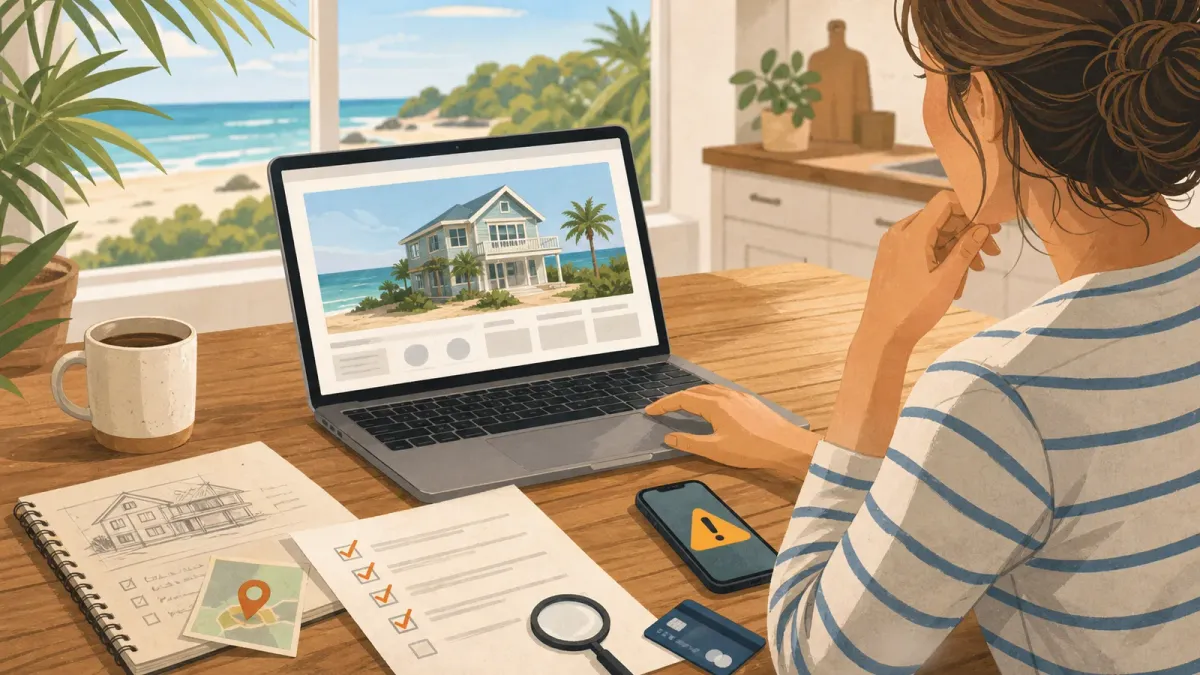
Vacation rentals can disappear quickly in peak summer weeks, and scammers use that urgency. Before you send a deposit for a beach house, cabin or city apartment, slow the booking down long enough to check whether the listing, host and payment path all line up.
The Federal Trade Commission warned on June 17, 2026, that summer travel scams often start with fake ads, lookalike websites or payment methods that are hard to reverse. The agency followed on July 13 with rental-listing advice: scammers may post homes that are not for rent, steal photos from legitimate listings or claim you cannot see the property because they are not actually able to show it.
Do This First
- Search the address and photos. Look up the rental address, host name and a few image descriptions. If the same home appears elsewhere with a different price, different host or conflicting dates, treat that as a stop sign.
- Stay inside the booking platform. The Better Business Bureau says a common vacation rental scam asks renters to move the conversation and payment outside the official site in exchange for a discount. That can remove the dispute path you may need later.
- Question urgent payment pressure. A host who says the deal expires immediately, asks for a wire transfer, gift card, cryptocurrency or payment app, or says a credit card is not allowed is pushing you toward methods scammers prefer.
- Verify before you trust a message. If you get a text, email or app message about a reservation problem, open the booking site or hotel site yourself instead of tapping the link. McAfee's 2026 travel research found scam confirmations and fake travel updates among the most common travel-scam patterns.
Check These Details
A real rental should have a clear cancellation policy, total price, tax and fee breakdown, host identity, check-in instructions and a way to keep receipts. Screenshots help, but save the actual confirmation emails and receipts too. If the host will only provide vague resort claims, refuses to put terms in writing or changes payment instructions after you agree, pause.
Reviews are useful only when they are specific. Look for repeated details about the same property, recent stays and ordinary complaints that sound human. A listing with only perfect generic reviews, no reviews at all, or photos that look too polished for the price needs more checking.
Common Mistakes
The biggest mistake is treating a lower price as proof that you found a bargain. Scammers know travelers are watching costs and availability, so the discount is often the bait. Another mistake is calling the first phone number in a search ad. Type the company address directly or use contact information from an official app or account page.
Do not send extra identity documents, account codes or card details through chat. A legitimate booking should not require you to share a one-time password, payment-app login code or photo of both sides of a card.
When To Get Help
If you paid and the host disappears, contact your card issuer or payment provider immediately, then report the listing to the booking platform. The FTC takes fraud reports at ReportFraud.ftc.gov, and BBB accepts scam reports through BBB Scam Tracker. If you are still deciding, the safest move is simple: verify the property, keep payment protected and walk away from any host who tries to make that difficult.


