
Cyberattacks on U.S. water and wastewater systems have now been reported across at least 12 states, according to CBS News and Axios reports, turning a technical warning about exposed control equipment into a national infrastructure story.
The most important point for residents is also the easiest to miss: officials and local utilities have not reported confirmed drinking-water contamination from the recent incidents. The risk is not that every tap is suddenly unsafe. The risk is that small water systems can be disrupted when the computers that run pumps, valves, sensors, and treatment equipment are reachable from the internet or protected by weak credentials.
Federal agencies had already warned water utilities about Iranian-affiliated cyber activity targeting operational technology. An April 7 advisory from the EPA, FBI, CISA, and NSA said U.S. organizations, including water systems, were seeing exploitation and sometimes disruption of commonly used operational technology. CISA later updated a broader warning on Iranian-affiliated threat actors targeting internet-connected operational technology.
What changed
The story widened from a series of local disruptions into a multi-state concern. AP reported earlier this week that Michigan had joined Minnesota in reporting cyberattacks on water systems, with Minnesota officials describing more than 30 targeted community systems. CBS News later reported that cyberattacks suspected by officials to be linked to Iran-backed hackers had been reported in at least a dozen states, including Michigan, Minnesota, Georgia, New Jersey, and South Dakota.
That does not mean federal investigators have publicly attributed every incident to Iran, and the article should not be read as a final attribution. The confirmed development is broader: water utilities in multiple states are reporting cyber incidents at the same time federal agencies are warning that operational technology used by water and wastewater systems is being targeted.
Why the control systems matter
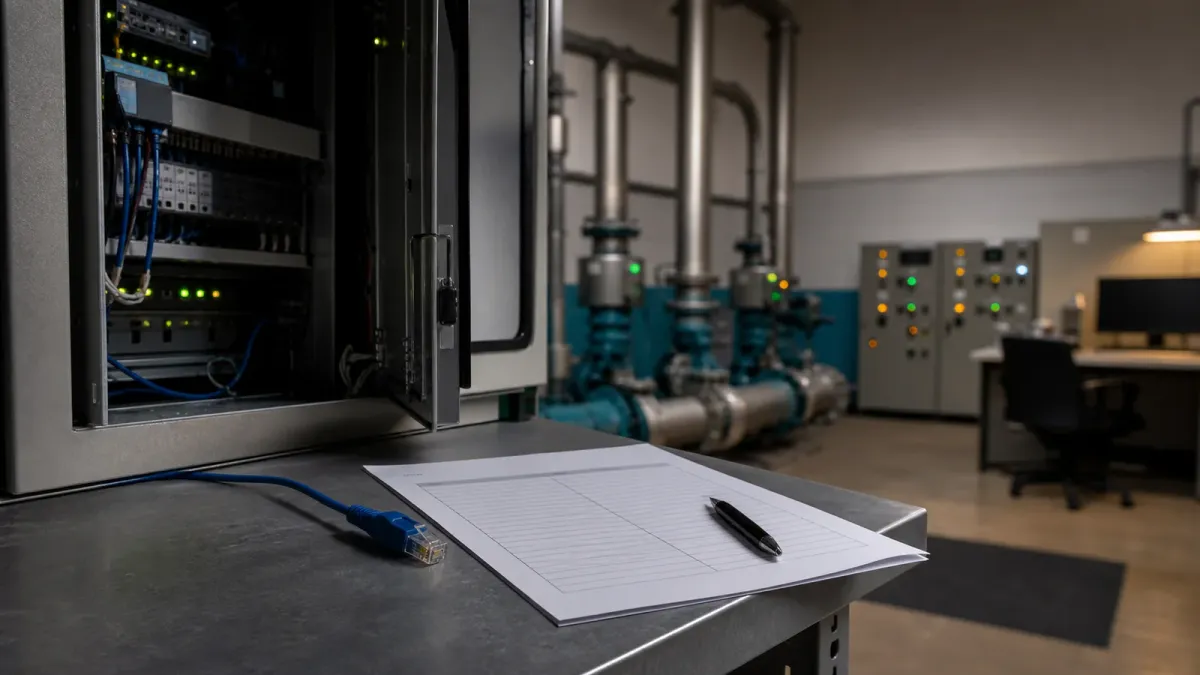
Water systems rely on industrial control equipment to manage physical operations. Programmable logic controllers, remote monitoring tools, and human-machine interfaces can help a utility keep pumps running, maintain pressure, monitor tanks, and adjust treatment processes. Those systems are not ordinary office computers. When they are misconfigured or exposed, a cyber intrusion can create a physical operational problem.
The federal advisory said recent activity had caused disruptions such as configuration wiping, software-based mechanical sensor tampering, and disruption of human-machine interfaces across critical infrastructure sectors. EPA officials also warned that a breach can disrupt treatment, damage equipment, introduce contaminants, or erode public trust. That is why even a limited incident can matter if it pushes a town into manual operations or forces a utility to issue a precautionary notice while it checks equipment.
What residents should watch
For households, the practical response is local and specific. A resident should look first to the water utility, city, county health department, or state environmental agency that serves their address. Those notices, not national speculation, determine whether a boil-water advisory, conservation request, pressure issue, or service interruption applies.
If a utility issues a notice, follow the exact instruction and date on that notice. A boil-water advisory is different from a request to conserve water. A cyber investigation is different from a confirmed contamination event. Residents should also be wary of scam messages that use a real cyber story to demand payment, account credentials, or a link click; utilities generally post urgent instructions through official sites, phone alerts, local emergency systems, or verified social channels.

What utilities are being told to do
Federal guidance has focused on basic but consequential steps: reduce internet exposure for control equipment, replace default passwords, use secure remote-access methods, monitor for suspicious activity, and report incidents to the FBI or CISA. EPA also points water systems toward cybersecurity technical assistance, including help for utilities with limited staff and budgets.
The larger lesson is that cybersecurity is now part of basic public works. A small town may not look like a strategic target, but its water system can still depend on internet-connected equipment that was installed for convenience, monitoring, or staffing efficiency. The latest reports show how that convenience becomes a vulnerability when foreign-linked or criminal actors go looking for exposed devices.
What happens next
Investigators still have to sort out which incidents are connected, who was responsible, and how much damage was actually done. Utilities will also have to decide whether to disconnect equipment, move to manual procedures, or accelerate upgrades that may be hard to fund.
For readers, the balanced takeaway is neither panic nor dismissal. The water coming from a household tap depends on local conditions and local notices. But the cyber risk is real enough that federal agencies are urging water systems to act before a temporary disruption becomes a more serious public-health or service problem.


