
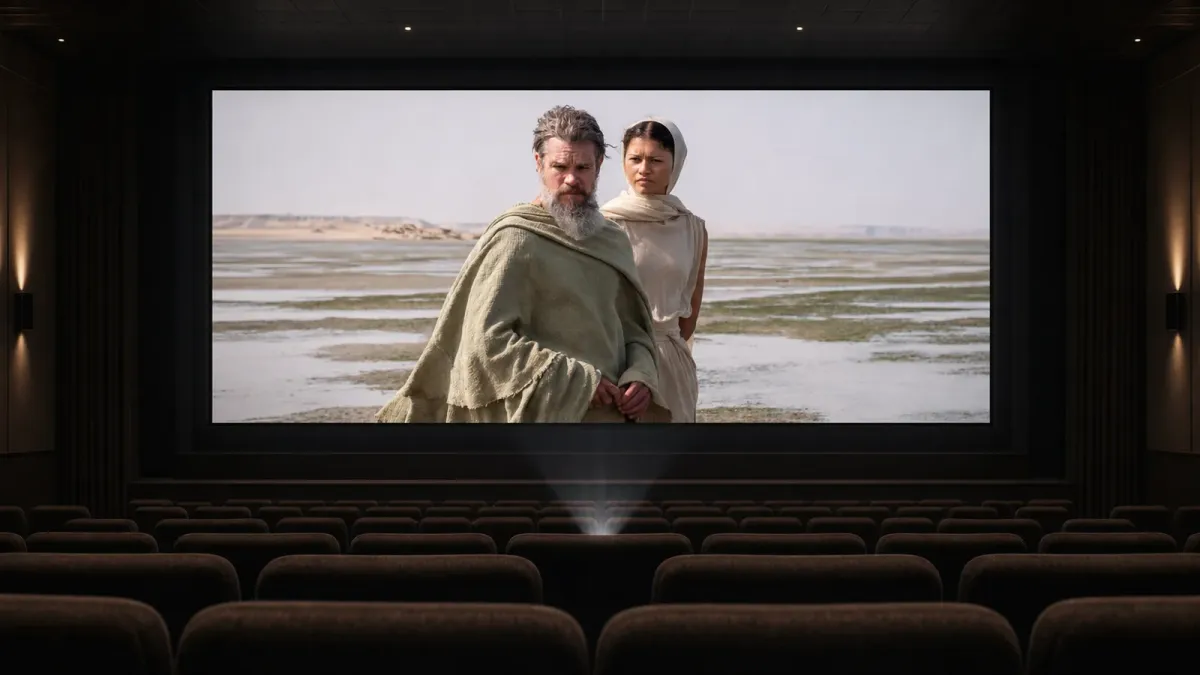
The Odyssey is the movie people want to see this weekend because it offers something streaming cannot easily reproduce: a nearly three-hour, large-format voyage with real locations, practical spectacle, a famous ensemble and enough emotional weight to make the scale matter. The short version is that Christopher Nolan has turned Homer’s ancient homecoming story into a present-tense theatrical event.
The demand is no longer based only on marketing. The film opened July 17 to an estimated $124.5 million in the United States and Canada and $264.1 million worldwide, according to The Associated Press. IMAX said the release delivered the company’s biggest global opening weekend, while second-weekend advance sales ranked among its 10 best. Those numbers suggest that people are not simply rushing to be first; many are waiting for the screen, seats or friends they want.
Word of mouth is helping. As of July 25, the film held a 94% Tomatometer score from 437 reviews and a 97% score from more than 10,000 verified audience ratings on Rotten Tomatoes. Scores can change, but the agreement between critics and ticket buyers explains why the conversation has shifted from whether Nolan could adapt the poem to how the film should be experienced.
The spectacle has a physical point
Nolan and cinematographer Hoyte van Hoytema shot every frame with IMAX film cameras. The movie’s official format guide says IMAX 70mm presentations use a tall 1.43:1 image, allowing more of the photographed frame to fill a floor-to-ceiling screen. That technical choice matters here because the story moves across seas, islands, battlefields and mythic encounters; scale is part of the narrative, not a decorative upgrade.
The production also gives viewers physical details to look for. Reporting by the Los Angeles Times described practical puppetry, animatronics and robotics in the Cyclops sequences, along with a real ship that cast members learned to sail. That craft gives the movie’s dangers weight and texture. Audiences can feel the difference between an adventure staged around tangible objects and one assembled mainly as frictionless digital scenery.
The appeal is not only technical. Homer’s poem has lasted because its monsters and detours surround a simple human desire: getting home. Nolan has described family and homecoming as the film’s center. That makes the spectacle easier to enter even for viewers who have not read the poem since school—or have never read it at all.
The cast makes an old story feel current
Matt Damon plays Odysseus, with Tom Holland as Telemachus, Anne Hathaway as Penelope, Zendaya as Athena, Robert Pattinson as Antinous, Lupita Nyong’o as Helen and Charlize Theron as Calypso. The recognizable cast creates several ways into the story: a weary leader trying to return, a family dealing with absence, gods intervening in human choices and rivals turning a long wait into a power struggle.
That ensemble is another reason the movie feels like a cultural appointment rather than homework. Nolan has a rare ability to attract viewers on the strength of his name, but the cast broadens the invitation. Fans of the actors, large-scale fantasy, Greek mythology and practical filmmaking can all arrive for different reasons and still share the same discussion afterward.
Who it is for—and who may want to wait
The movie is a strong weekend choice for viewers who want an immersive theatrical experience, are comfortable with R-rated mythic violence and do not mind a 2-hour-52-minute runtime. It is especially suited to people who enjoy Nolan’s preference for dense structure, physical filmmaking and stories about time, memory, duty and obsession.
It may be a weaker fit for anyone looking for a light, short or family-friendly outing. The running time also makes seat selection and start time more important than usual. A well-positioned seat in a good standard auditorium can be a better experience than a poor seat in a premium room.
Choose the format without turning it into a test

IMAX 70mm is the rarest presentation, and only 41 screens worldwide could show the film that way during opening weekend, according to the AP. If a reasonably priced, comfortable seat is available nearby, the expanded frame is a meaningful part of the design. Regular IMAX, standard 70mm, Dolby Cinema and other premium large formats can also deliver scale, strong sound and a bright image.
But format anxiety should not become a reason to skip the movie. Most people will not have access to IMAX 70mm, and the film’s performances, practical effects and homecoming story do not disappear on a conventional screen. Check the theater’s screen size, projection quality, seat map and total price; then choose the best combination you can actually enjoy.
What to watch next
The immediate question is whether the unusually strong premium-format demand and audience scores carry the film through its second weekend and beyond. The next major competition arrives July 31 with Spider-Man: Brand New Day, which also stars Holland and Zendaya. Until then, The Odyssey has the unusual advantage of being both the weekend’s dominant blockbuster and the movie many people are still trying to see in their preferred format.
Bottom line: people want to see The Odyssey because it promises a communal, carefully made spectacle with a human reason to be enormous. Pick a format that fits your location and budget, avoid spoilers, and let the voyage—not the ticket hunt—be the event.


