
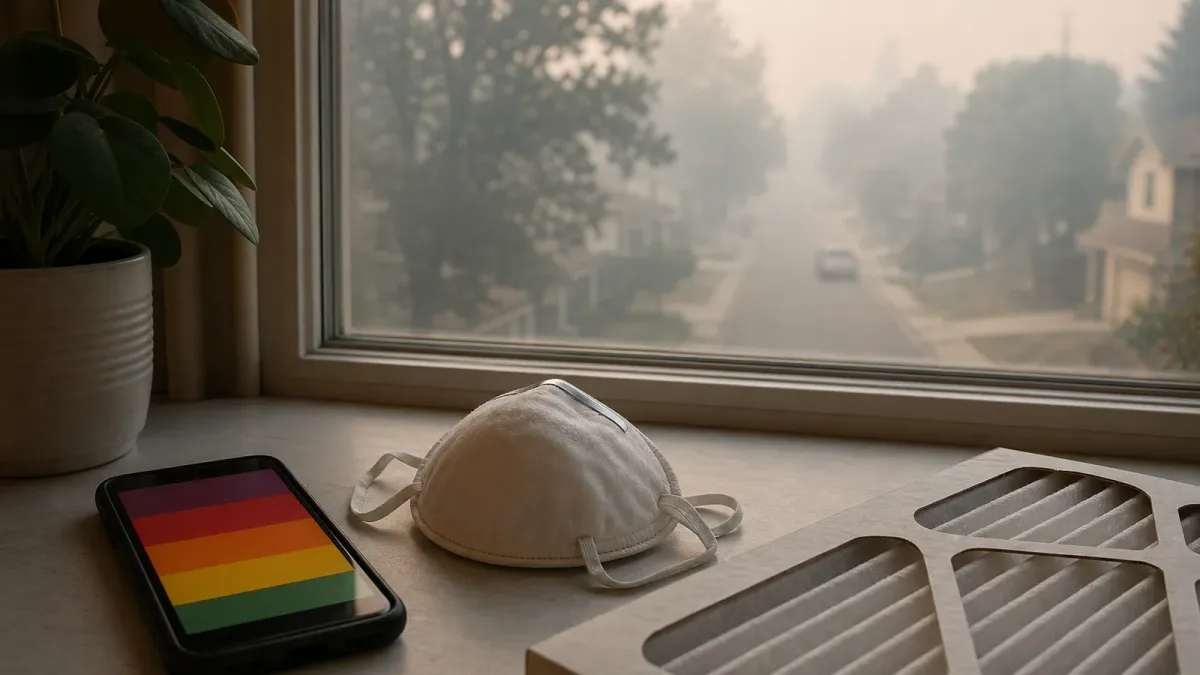
Wildfire smoke remains a practical air-quality problem for parts of the United States on Monday, July 20, 2026, after days of smoke from fires in Canada and northern Minnesota pushed fine-particle pollution into the Midwest, Great Lakes and parts of the East.
The most useful first step is local, not visual: check the Air Quality Index before a run, commute, camp day, outdoor job or youth sports practice. Smoke can sit near the ground, shift with wind and vary sharply by county.
In western Pennsylvania, the state Department of Environmental Protection declared a Code Orange alert for fine particles from wildfire smoke for July 20 in counties including Allegheny, Beaver, Butler, Washington and Westmoreland. Local reports also showed Monday smoke alerts or lingering moderate conditions in parts of Illinois and New England.
Do this first
- Check AirNow or your state air agency. AirNow's scale runs from Good at 0-50 to Hazardous at 301 and above. Orange, or 101-150, means air is unhealthy for sensitive groups.
- Move hard exercise indoors when the AQI climbs. Children, older adults, pregnant people and anyone with asthma, heart disease, COPD or other lung conditions should be more cautious earlier.
- Keep indoor air cleaner. Close windows during smoke episodes, set HVAC systems to recirculate when possible and use a properly sized HEPA purifier if you have one.
- Use a better mask if you must be outside. A well-fitting N95 or similar respirator helps more than a loose cloth or surgical mask against fine smoke particles.
Check these details
The AQI color matters because each step changes who should adjust plans. At orange, sensitive groups should reduce exposure. At red, everyone should cut back on time outside and avoid strenuous outdoor activity. At purple or worse, the advice becomes more urgent: stay inside with filtered air if possible and find cleaner air elsewhere if your home cannot be kept comfortable and breathable.
Wildfire smoke is not just haze. The concern is fine particle pollution, commonly called PM2.5, which can aggravate heart and lung disease and trigger coughing, throat irritation, headaches or shortness of breath. Symptoms that feel severe, sudden or unusual should be treated as a reason to seek medical help or official local guidance.
Common mistakes
Do not assume rain, cooler air or a clearer sky means the smoke problem is over. Also avoid making indoor air worse while sheltering: burning candles, using wood stoves, frying food without ventilation or vacuuming can add particles inside.
For households without air conditioning or filtration, public libraries, malls, community centers or other cooled buildings may be safer during the worst hours. Recheck conditions later in the day because smoke can improve or deteriorate quickly as winds shift.
What to watch next
Watch your local AQI forecast, state air-quality alerts and the AirNow Fire and Smoke Map through Tuesday, July 21. If a school, workplace, camp or event uses its own cutoff, follow that policy rather than relying on a regional headline.


