
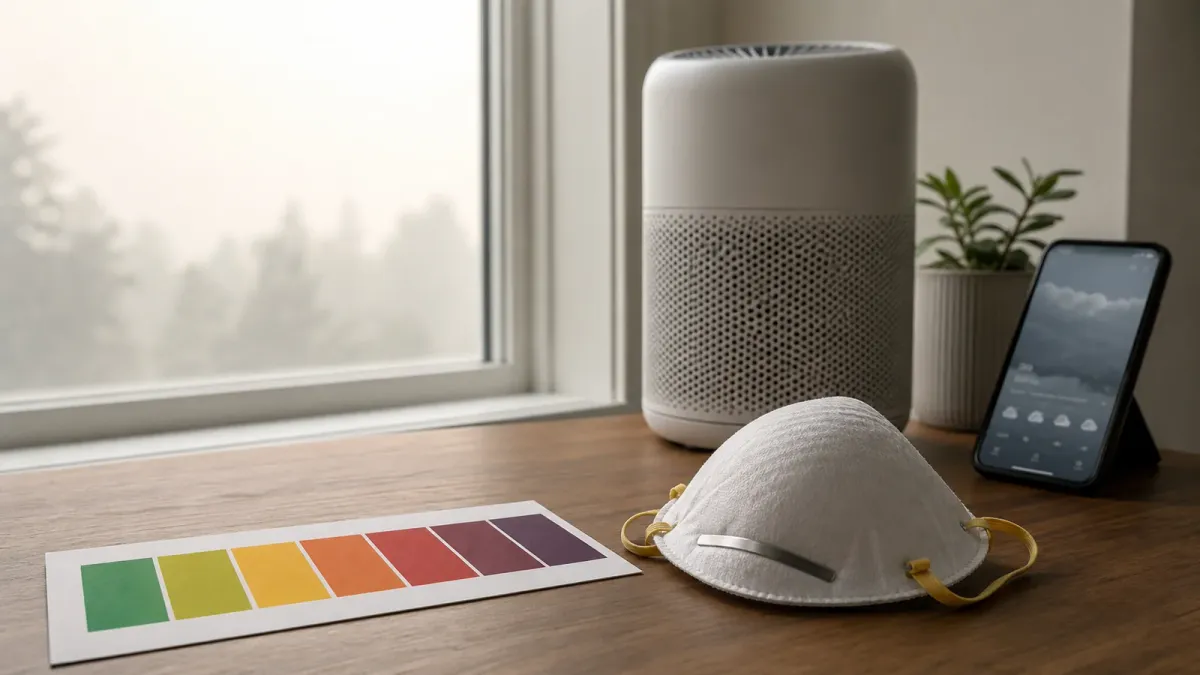
Wildfire smoke remains a live summer planning problem across parts of the United States, with health agencies urging people to check local air quality before exercising, commuting, opening windows or sending children outside.
The fastest number to check is the Air Quality Index, or AQI. AirNow, the federal air-quality portal run by EPA and partner agencies, turns pollutant readings into color bands from green to maroon so people can decide when smoke is no longer just a nuisance.
Do this first
- Check your ZIP code on AirNow before outdoor plans. Smoke can shift during the day, and a regional forecast may miss neighborhood-level changes.
- At orange AQI, sensitive groups should cut back. Children, older adults, pregnant people and anyone with heart or lung disease should reduce prolonged or heavy outdoor exertion.
- At red AQI, make it a broader indoor day. Everyone should consider reducing long or intense outdoor activity; sensitive groups should avoid it when possible.
- At purple or maroon AQI, follow official alerts closely. Those levels mean very unhealthy or hazardous air, and local officials may advise stronger limits on outdoor activity.
Check these details
CDC guidance says smoke can irritate eyes and airways and can worsen asthma, chronic obstructive pulmonary disease and heart disease. Symptoms such as wheezing, chest pain, fast heartbeat or unusual shortness of breath should be treated as a reason to get medical advice quickly.
EPA guidance also puts indoor air on the checklist. Close windows and doors when outdoor smoke is heavy, use a portable air cleaner if you have one, and avoid adding indoor particles from candles, fireplaces, gas stoves, smoking, vaping or vacuuming without a HEPA filter.
Common mistakes
Do not rely on smell alone. Smoke can be harmful before it smells dramatic, and conditions can worsen after a wind shift. Also do not assume a cloth mask protects against smoke particles. A properly fitting N95 or similar respirator can reduce particle exposure, but loose face coverings do little for fine smoke pollution.
Another mistake is treating one good reading as permission for the whole day. Check again before outdoor workouts, youth sports, lawn work and evening errands, especially when Canadian or Western wildfire smoke is moving through on changing winds.
When to get help
People with asthma or heart disease should follow their action plan and keep rescue medicines available. Anyone with severe symptoms, including trouble breathing, chest pain, confusion or bluish lips, should seek emergency care.
For everyone else, the practical rule is simple: check AQI, reduce exertion as colors worsen, clean the air where you spend the most time, and wait for official all-clear guidance before resuming heavy outdoor activity.


