
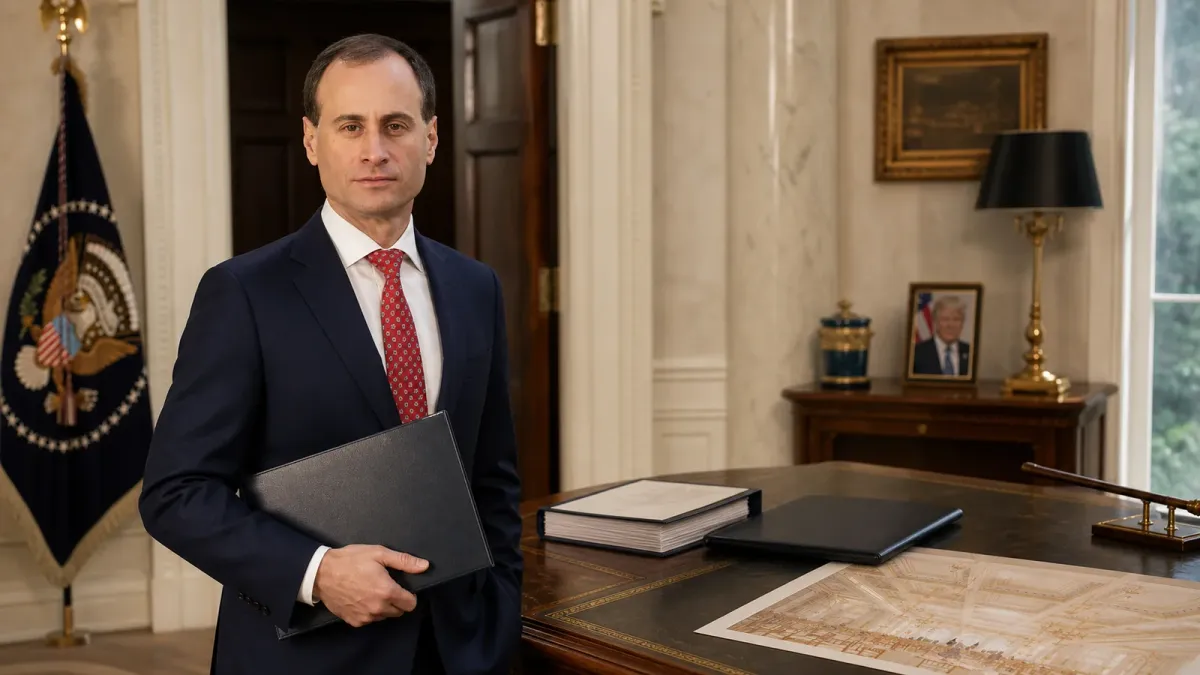
President Donald Trump has named White House staff secretary Will Scharf as his next White House counsel, putting a close legal ally into the administration's top in-house legal job as a court fight over Trump's White House ballroom project moves toward a possible Supreme Court appeal.
The change is scheduled for Sept. 1. Scharf will replace David Warrington, who Trump said is leaving for the private sector, according to Associated Press reporting on Trump's announcement.
The timing matters because Scharf is not just another lawyer moving into a senior West Wing office. He has also chaired the National Capital Planning Commission, the federal planning body involved in the disputed ballroom project. A divided federal appeals court recently halted aboveground construction on the project, making the next legal steps part of the job Scharf is about to inherit.
What changed
Trump announced Sunday, Aug. 9, 2026, that Scharf would become White House counsel and assistant to the president beginning Sept. 1. AP reported that Trump praised Scharf's legal background and noted that he had represented Trump in cases including work before the Supreme Court.
Scharf is already a familiar figure in the administration. As staff secretary, he has managed documents and frequently appeared beside Trump during Oval Office signing events. In July 2025, Trump also put him in charge of the National Capital Planning Commission, giving him a formal role in the federal planning process around major Washington projects.
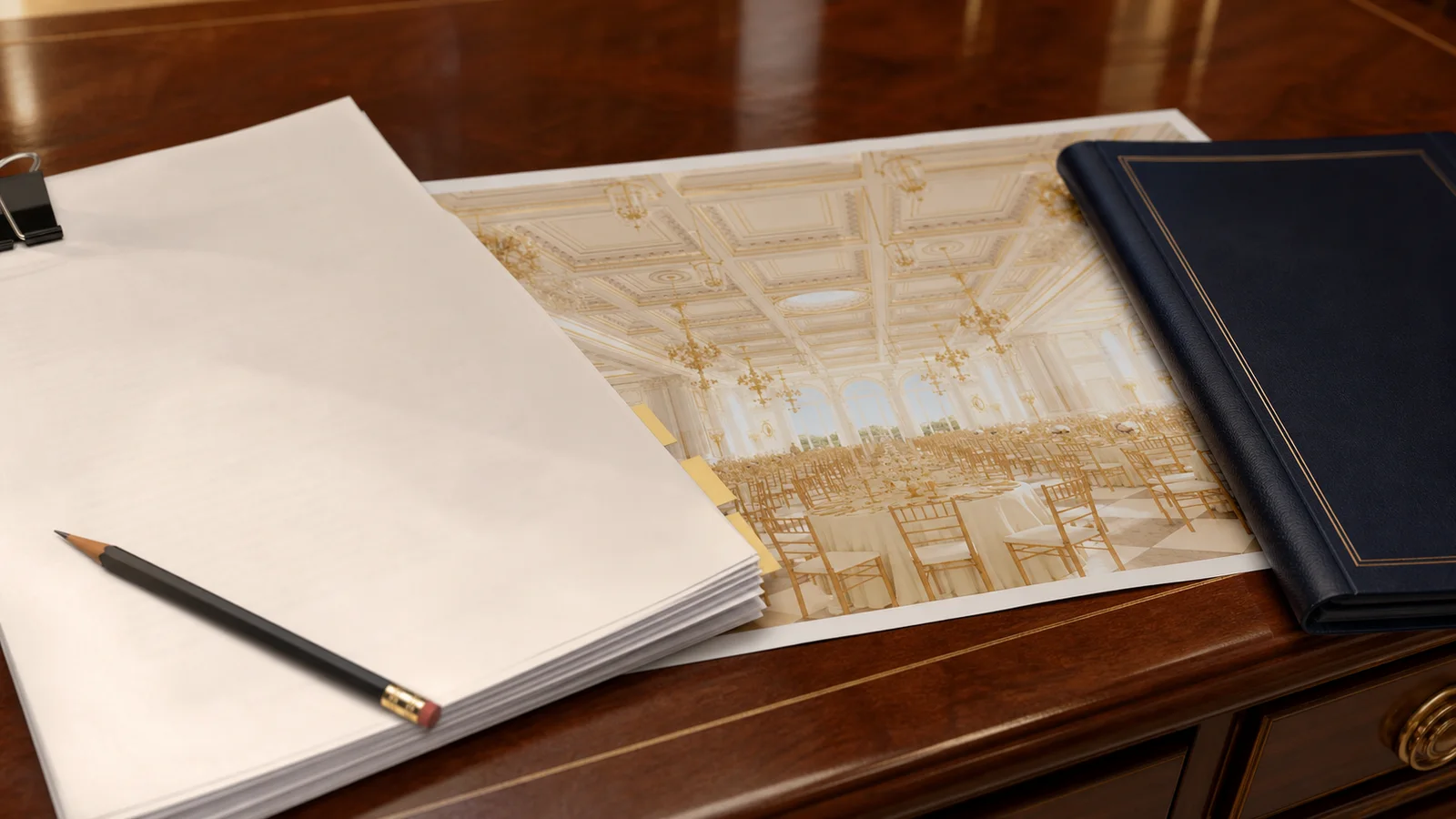
The ballroom dispute is the immediate pressure point. Court records and AP coverage say the project was planned as a 90,000-square-foot addition with an estimated $400 million cost. The D.C. Circuit ruling blocked aboveground construction while allowing some security-related underground work to continue, according to the court document and news coverage of the decision.
The case is also unusual because it is about the White House itself, not a normal agency building. The dispute puts historic-preservation rules, congressional power over federal property, private funding claims and presidential security arguments in the same legal frame. That is why a personnel change in the counsel's office now carries more weight than a routine West Wing reshuffle.
Why the counsel job matters
The White House counsel is not the president's personal defense lawyer. The office advises the presidency and White House staff on executive authority, legal risk, nominations, oversight, legislation and document handling. In a second Trump administration that is already facing major fights over courts, Congress and agency power, the counsel's office can shape how aggressively the White House tests legal boundaries.
That makes Scharf's appointment consequential even for readers who are not following the ballroom fight closely. The same office that reviews executive actions and responds to oversight demands may soon be helping decide how the administration frames a Supreme Court appeal over who can authorize major changes to the White House complex.
The appeals court's order turns the ballroom case into a separation-of-powers test. Preservation groups argued that a major structural change to the White House required proper review and congressional authorization. The administration has argued the project serves security and official-event needs. The next phase will test how much unilateral room a president has over the executive residence when Congress has not signed off.
The appointment also lands months before the midterm elections, when oversight pressure could increase if Democrats gain ground in Congress. A counsel's office normally has to prepare for document requests, subpoenas, ethics questions and litigation at the same time it reviews new policy moves. Scharf will be taking over as several of those pressures converge.
What to watch next
The first date is Sept. 1, when Scharf is expected to take over the counsel role. Before then, the administration may continue preparing its appeal strategy in the ballroom case while also managing other legal fights across immigration, oversight and executive orders.
The second question is whether the Supreme Court agrees to intervene quickly. If it does, the dispute could become a fast-moving test of presidential control over White House construction. If it does not, the appeals court ruling will keep aboveground work stalled while the case continues.
The practical signal is broader than one building project. Scharf's promotion shows Trump consolidating legal advice around loyal aides who have already worked on his most contested priorities. The ballroom fight will now help show how that legal team handles a direct limit from the courts.


