
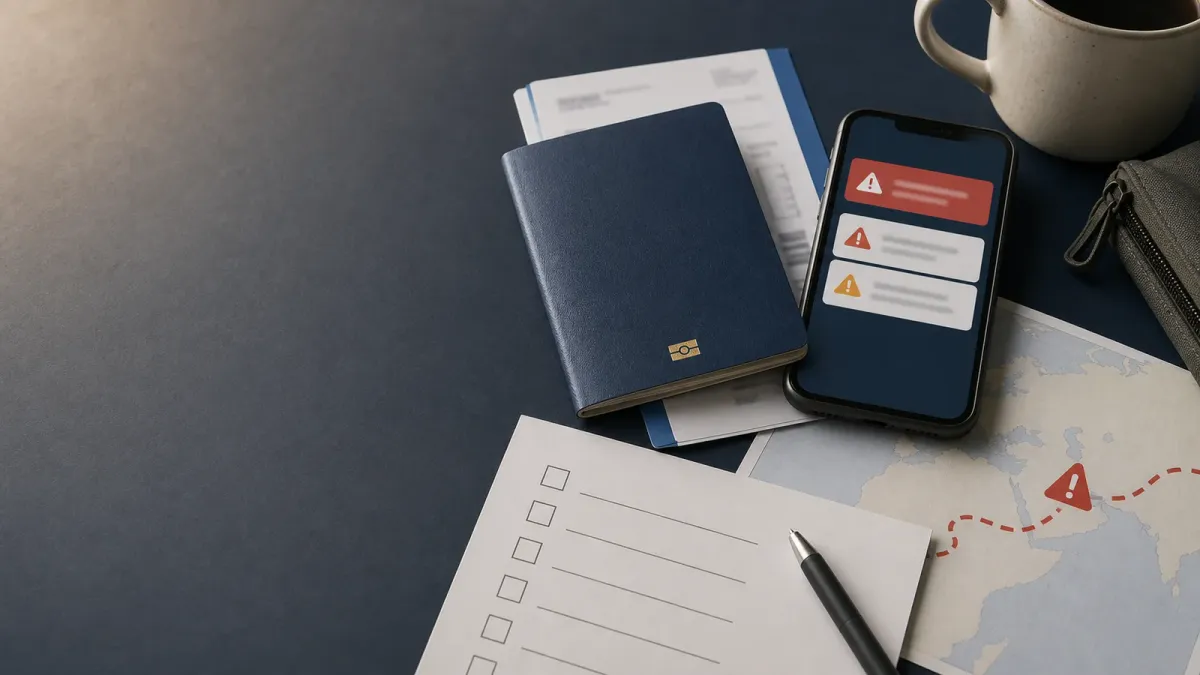
The U.S. State Department updated its worldwide caution on July 18, 2026, telling Americans abroad and people planning international trips to exercise increased caution, especially in the Middle East, because of heightened regional tensions and the possibility of sudden escalation.
The alert does not tell Americans to cancel every overseas trip. It does mean travelers should treat the next few days as a checkpoint: destination advisories, embassy alerts, airline routing and emergency contact plans can change faster than a normal vacation itinerary.
Do this first
- Check your destination page. Start with the State Department's country-specific travel advisory, then read any recent embassy or consulate alerts for the exact city or region you plan to visit.
- Look at the flight path, not only the ticket. The July 18 caution warned that flight cancellations and periodic airspace closures may disrupt travel, so confirm connections and rerouting options with the airline before departure.
- Enroll in STEP. The Smart Traveler Enrollment Program lets the nearest U.S. embassy or consulate send security updates and contact you during an emergency.
- Lower your profile near obvious U.S.-linked locations. The State Department says U.S. interests and places associated with Americans could be targets, so travelers should follow local embassy guidance and avoid demonstrations or security incidents.
Check these details
Separate the worldwide caution from country-level advisories. A country may still be Level 1 or Level 2, while other destinations carry Level 3 or Level 4 warnings because of conflict, crime, terrorism, unrest, health care limits or other risks. The practical question is not just whether a country is open; it is whether your specific route, neighborhood and backup plan still make sense on July 20, 2026.
Travelers already in the Middle East should monitor official messages more closely than usual. The State Department said the security environment remains complex, and reporting on the alert has tied the renewed concern to recent attacks, airport and seaport security disruptions in Jordan, and the risk of retaliation against U.S. citizens or interests.
Common mistakes
Do not assume a travel advisory automatically triggers refunds or travel-insurance coverage. Many policies require a specific covered event, a government evacuation order, a carrier cancellation or a documented interruption. Save screenshots or emails from airlines, hotels and official alerts if your plans change.
Do not rely on social posts alone. Search interest in travel warnings rose sharply on Google Trends, but the facts that matter for a trip should come from official advisories, carriers and local authorities. If you are traveling with relatives or a group, make sure one person is not the only holder of confirmation numbers, medicine lists, passport scans and emergency contacts.
When to get help
If you are abroad and face an immediate emergency, contact local emergency services first. For U.S. consular help, use the nearest embassy or consulate and the State Department's emergency contact channels. If your trip starts soon, decide before leaving which flight, hotel, local contact and document copies you would use if the first plan fails.


