
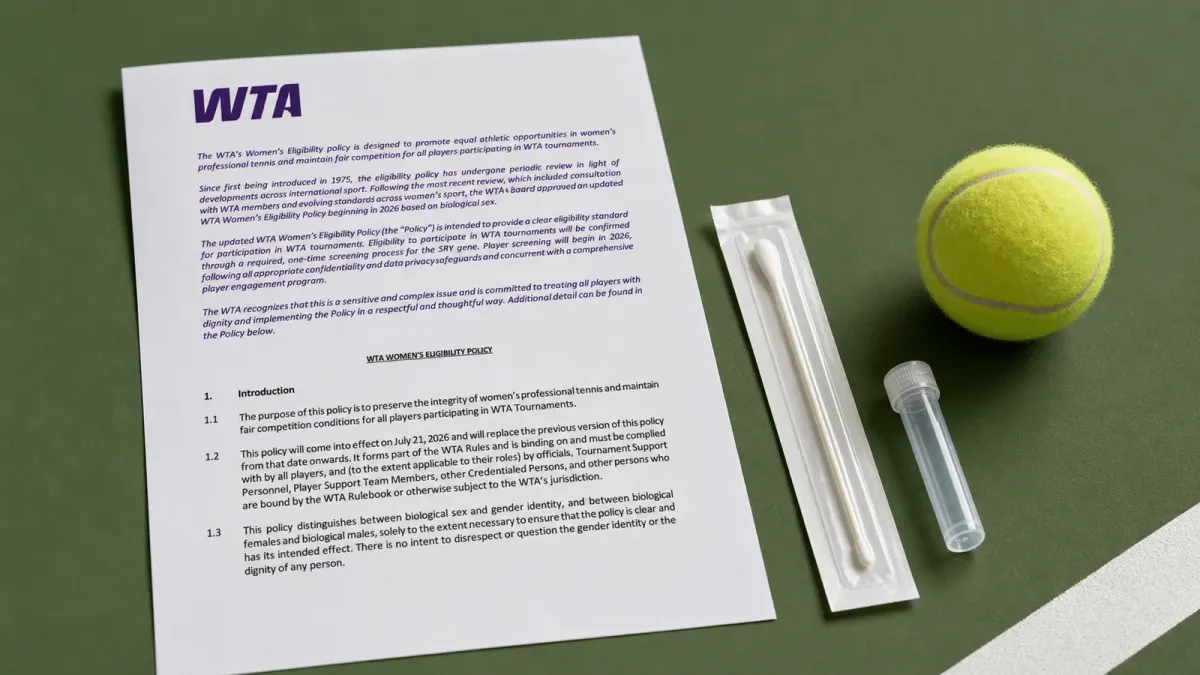
The Women's Tennis Association's new eligibility policy is now in effect, requiring players seeking to compete in WTA tournaments to clear a one-time screening process for the SRY gene.
The short answer: the rule changes how the tour confirms eligibility for the women's category. The WTA policy says screening begins in 2026, after the policy took effect on July 21, 2026, and may use a saliva sample, cheek swab or blood sample.
The change moves the tour away from its previous transgender-participation standard, which Reuters reported had allowed transgender women to compete after declaring a female gender identity and maintaining lowered testosterone for a set period. The WTA's new policy is based on biological-sex criteria tied to SRY screening.
What changed
The WTA policy says eligibility will be confirmed through a required, one-time SRY screening process. It describes the SRY gene as a marker involved in male sex development and says player screening will be conducted with confidentiality and data privacy safeguards.
A player who does not provide required forms or eligibility confirmation can be provisionally suspended while the WTA reviews the case. If a screen is positive, the policy says the player is responsible for demonstrating to the WTA Medical Manager that an exception applies, including certain disorders of sex development described in the policy.
The policy also says player medical information and screening results must be treated as sensitive personal information. The WTA says it will not normally comment publicly on a case unless public comments by the player or representatives make a response necessary.
Why it matters
The practical effect is broad: the rule applies to players competing or seeking to compete in WTA tournaments, not only to players whose eligibility has been publicly questioned. Reuters reported there are no known transgender women currently active at any level of professional tennis, which means the new screening requirement could affect many players even when no individual eligibility dispute exists.
The rule also changes the stakes around privacy. A one-time test may sound simple, but the policy creates a medical-review process, possible provisional suspensions, and appeal routes. A player found ineligible may appeal certain decisions to the Court of Arbitration for Sport, while broader challenges to the policy are routed through courts in Florida, where the WTA is based.
That combination makes the rollout more than a culture-war headline. It is a governance change with operational questions for athletes, tournament officials and medical administrators: who gets scheduled first, how samples are handled, how quickly results return, and how players are told what information is retained. Those details will determine how disruptive the rule feels in practice.
What to watch
The next questions are practical ones: how quickly the WTA rolls out screening, how it explains the process to players, whether any eligibility cases become public, and whether player groups or advocates challenge the policy. For fans, the key point is that this is no longer a proposal. It is now part of the WTA rulebook for the 2026 season.


