
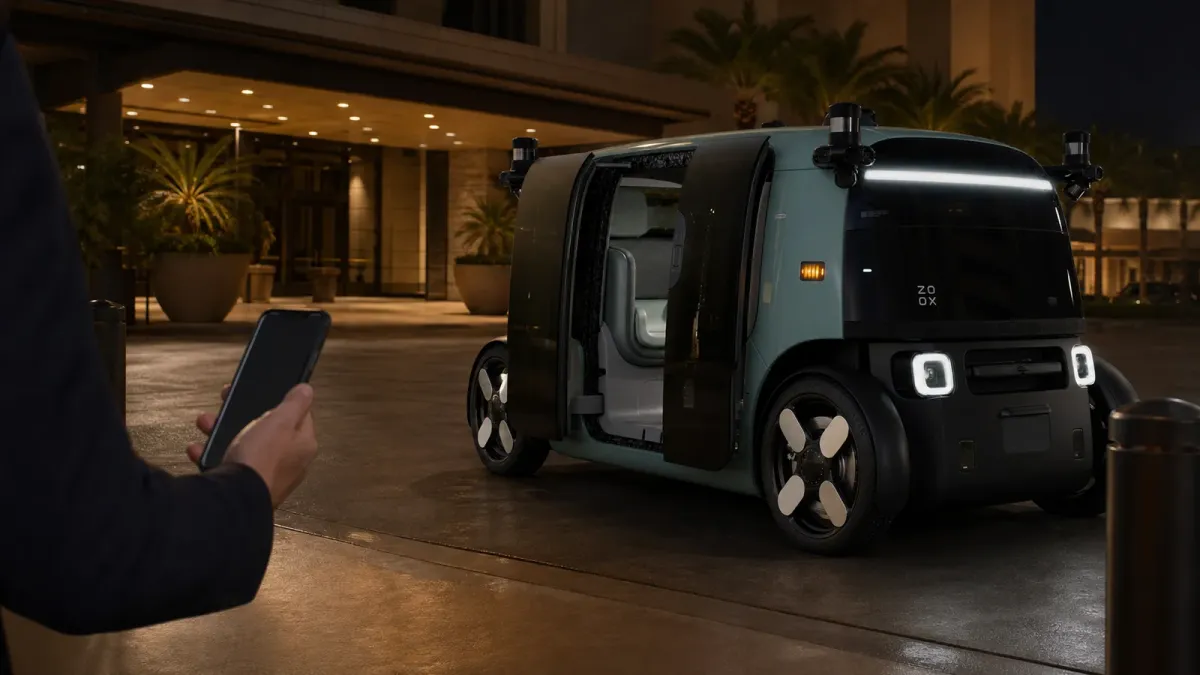
Zoox is set to start charging passengers for rides in Las Vegas on Monday, August 10, turning its steering-wheel-free robotaxi from a public trial into a paid transportation option.
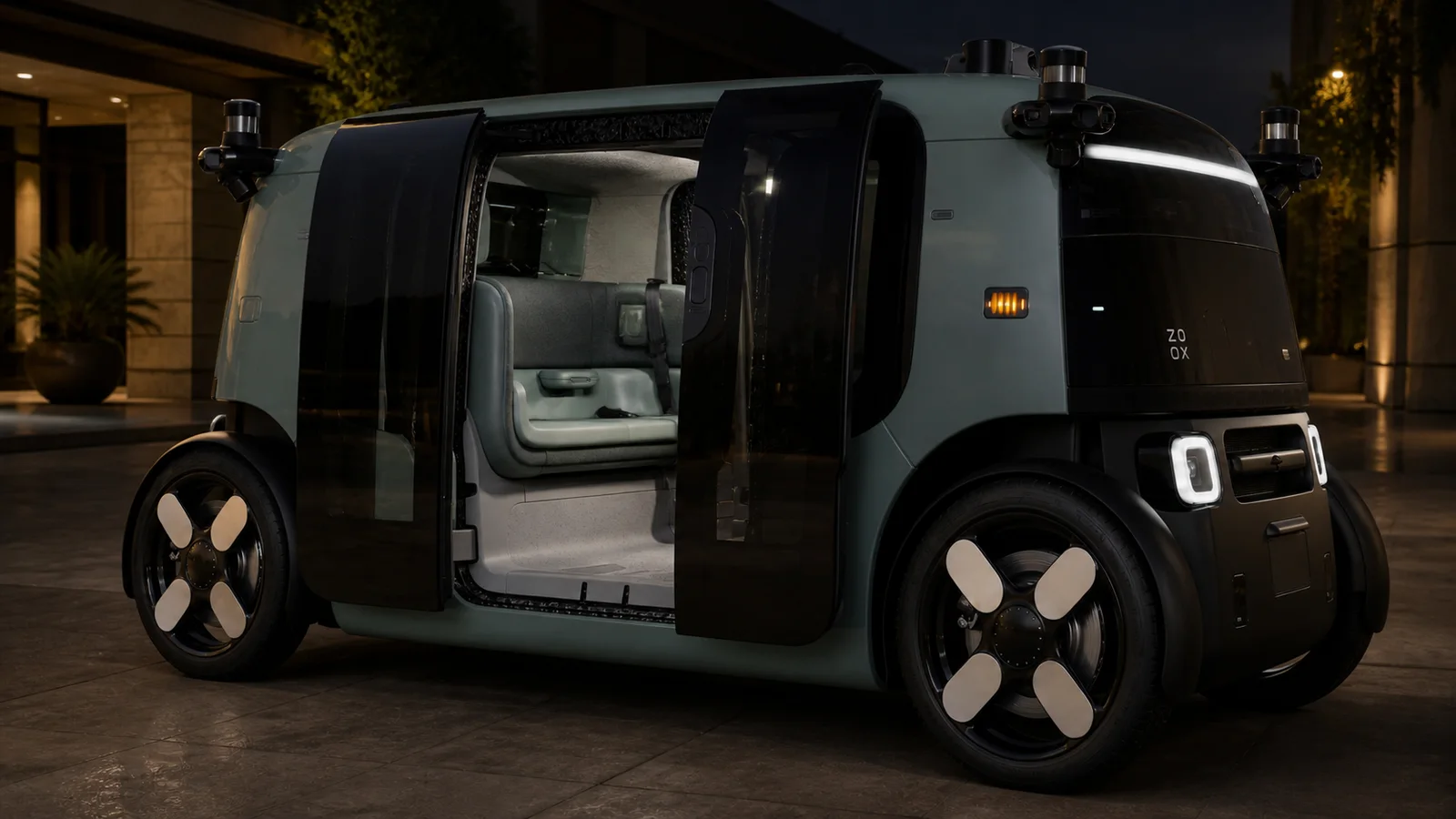
The move matters beyond the Strip because Zoox is not using a conventional car with a self-driving system added on. Its vehicle was built without a driver seat, steering wheel, pedals, side mirrors or dashboard, so the first paid rides test how quickly federal rules, city operations and rider trust can adapt to a vehicle designed only for passengers.
The immediate answer for riders is simple: this is still a limited launch, not a nationwide replacement for ride-hailing. The bigger question is what Zoox must prove before a no-driver-control vehicle feels ordinary in a city full of tourists, hotel traffic, emergency vehicles and curbside pickups.
What changed
The National Highway Traffic Safety Administration announced on July 30, 2026, that it would allow Zoox to commercially deploy robotaxis through a temporary exemption. NHTSA said the exemption allows up to 2,500 vehicles annually for two years and will come with an enhanced oversight structure.
A Federal Register notice published July 31 says Zoox may manufacture vehicles under that exemption for two years, with no more than 2,500 exempted vehicles introduced into interstate commerce for commercial deployment in any 12-month period. The notice covers exemptions from parts of several federal motor vehicle safety standards, including rules tied to defrosting, lighting, rear visibility, braking, glazing and occupant crash protection.
TechCrunch reported that Zoox plans to start charging for Las Vegas rides on August 10 after nearly a year of offering public rides there. Axios reported that the company has been trying to scale a vertically integrated service around its own vehicle, depots and rider experience rather than relying on a retrofitted car.
Why this ride is different
Most people are used to seeing autonomous vehicles that still look like ordinary cars. A steering wheel, pedals and a front-facing driver's seat give riders an obvious mental fallback, even when no one is actively driving.
Zoox removes that fallback. The vehicle is designed around passengers facing inward, with the automated driving system handling the driving task inside its approved operating area. That makes the experience feel closer to stepping into a small shuttle than calling a normal car.
For riders, the first check is practical rather than futuristic: where does it pick up, where does it drop off, how long is the wait, how does pricing compare with a familiar ride-hailing option, and what happens if the vehicle stops, reroutes or needs remote assistance?
The safety and trust test
NHTSA framed the exemption as part of a broader automated-vehicle policy package. The agency also said it is funding a three-year, $5 million effort with SAE Industry Technologies Consortia to help develop automated-vehicle performance standards.
That matters because current federal vehicle rules were largely written around human drivers. The hard policy problem is not just whether a single vehicle can operate in a mapped service area. It is whether regulators can set objective rules for vehicles that may not need the same controls, mirrors or displays that older standards assumed.
AP reported that federal regulators are clearing the way for robotaxis without manual controls while safety advocates continue to ask for stronger transparency around incident data and real-world performance. That tension will shape how fast services like Zoox expand from demonstration zones into everyday city transportation.
What to check before riding
If you are offered a Zoox ride in Las Vegas, check the service area before treating it like a normal cab. A robotaxi can be useful for some short point-to-point trips while still being unavailable for airports, neighborhoods, late-night routing changes or locations outside its mapped operating zone.
Second, check the trip screen before accepting. The important details are the pickup point, drop-off point, estimated wait, fare, support controls and any instructions for entering or exiting the vehicle. A no-steering-wheel ride can be calm once underway, but the curbside handoff is where most rider confusion is likely to happen.
Third, keep expectations modest. A paid launch does not mean the vehicle can handle every road, weather condition, traffic pattern or emergency scene. It means the company and regulators have cleared a limited commercial step with ongoing oversight.
What happens next
The Monday launch gives Zoox a chance to prove that passengers will pay for a purpose-built robotaxi, not just try one for novelty. It also gives regulators a live test case for how exemptions, reporting and performance standards should work as more companies pursue vehicles without traditional controls.
For now, the useful question is not whether every ride-hailing car is about to lose its steering wheel. It is whether Zoox can make one restricted Las Vegas service feel reliable enough that riders stop thinking about the missing wheel at all.


