
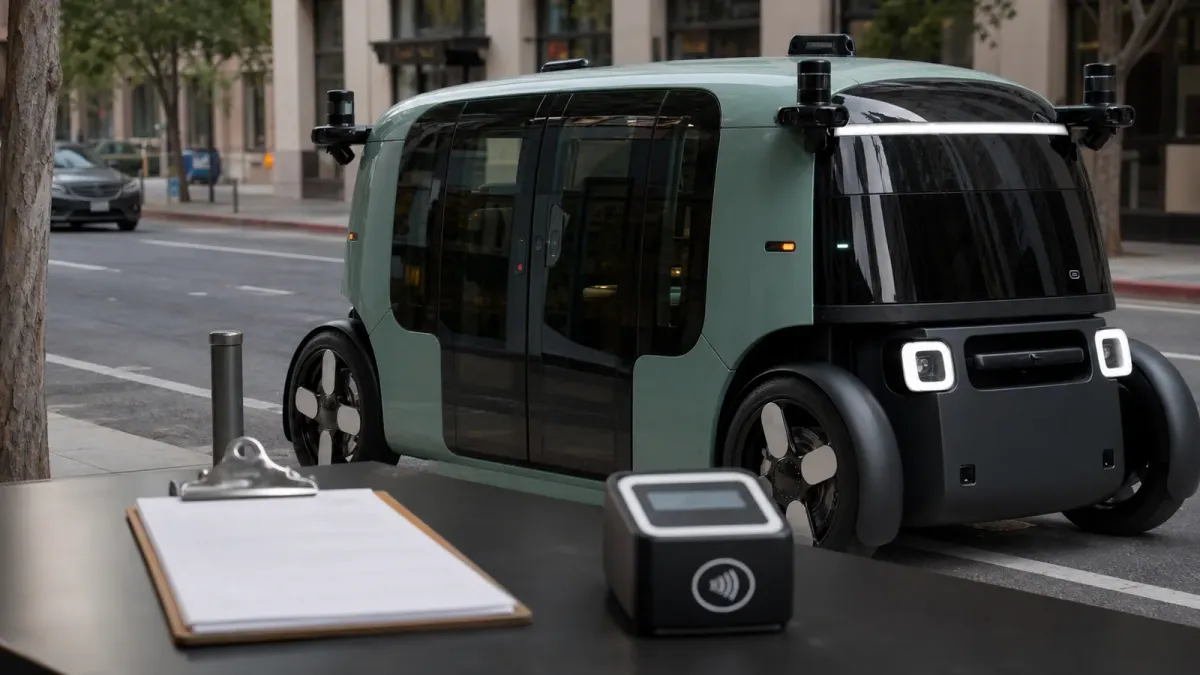
Zoox just moved one step closer to making steering-wheel-free robotaxi rides a paid service in the United States, after federal regulators granted the Amazon-owned company a temporary exemption from parts of federal vehicle-safety rules written for cars with human drivers.
The National Highway Traffic Safety Administration announced the decision on July 30, 2026, and the Federal Register notice makes the exemption effective from July 31, 2026 through July 31, 2028. The approval is limited, but it matters because it lets Zoox commercially deploy a purpose-built autonomous vehicle that has no manual steering wheel, pedals, driver seat or traditional driver visibility controls.
For riders, the practical question is no longer whether a vehicle like this can be tested. It is what should be checked before paying for one: where it is allowed to operate, what happens when the system needs help, what data regulators will see and how quickly the rules change if safety problems appear.
What the exemption actually allows
NHTSA says the temporary exemption lets Zoox commercially deploy up to 2,500 vehicles annually for two years, subject to an enhanced oversight structure. The Federal Register notice says the grant covers portions of eight Federal Motor Vehicle Safety Standards, including rules tied to defrosting and defogging, windshield wiping and washing, lamps, rear visibility, light-vehicle braking, interior impact protection, glazing and occupant crash protection.
That does not mean federal regulators removed every safety obligation. NHTSA said the exemption is based on a finding that requiring compliance with the specific provisions would prevent Zoox from commercially deploying a vehicle with an overall safety level at least equal to a compliant vehicle. The agency also said it is using operational authorizations that can set, modify or expand the conditions under which exempted vehicles operate.
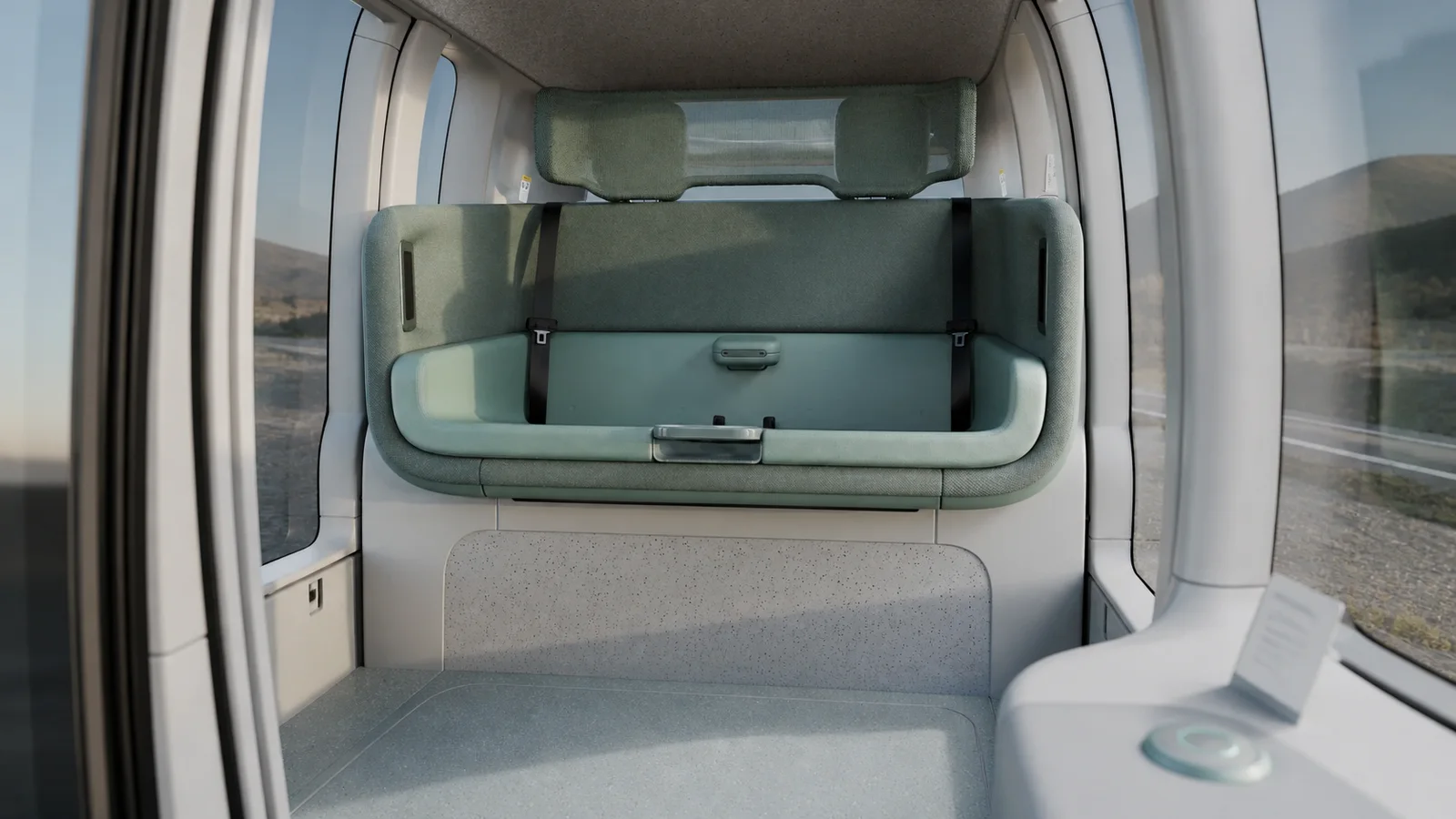
The design is the reason the exemption is necessary. In the Federal Register notice, NHTSA describes the Zoox robotaxi as a passenger car equipped with an automated driving system and designed specifically for autonomous ride hailing. Its seating is arranged carriage-style, with passengers facing each other, and the vehicle is symmetrical front to rear. Zoox has said it will keep ownership of the vehicles and remain responsible for fleet management, maintenance, routing, remote operations support and customer service.
Why riders should care
A no-wheel robotaxi changes the fallback assumption inside a ride. In a normal car, a human driver or passenger can see familiar controls. In Zoox's model, passengers are not expected to intervene in the driving task. The company says remote assistance can provide contextual help to the automated driving system, and NHTSA's notice says limited low-speed remote driving can occur under specific conditions.
That makes the first consumer checklist fairly simple. Before paying for a ride, riders should confirm the service area, the pickup and drop-off rules, the support process inside the app or cabin, accessibility details, how to end or report a ride problem and what local approvals still apply. A federal exemption is not the same as unlimited operation in every city.
The oversight details matter as much as the futuristic cabin. NHTSA's July 30 announcement said the Zoox exemption comes with an adaptable oversight structure. The Federal Register notice adds that operational authorizations can be tailored to operating environments and updated as the technology matures. In plain English, regulators are trying to avoid a one-time permission slip and keep conditions attached as the fleet changes.
The industry signal
The Zoox decision is also a signal to the broader autonomous-vehicle industry. Most robotaxi services on U.S. roads still use modified conventional vehicles that keep familiar human-driver equipment. Zoox is trying a different route: a vehicle built around passengers and automation from the start.
That puts pressure on regulators to answer a hard question. If a vehicle is designed never to be driven by a human occupant, which old requirements still protect people, and which ones only assume a steering wheel exists? NHTSA's answer, for now, is a temporary exemption with caps, public conditions and continuing oversight while it works on broader automated-vehicle performance standards.
The agency said it is also funding a three-year, $5 million standards consortium with SAE Industry Technologies Consortia to speed the development of automated-vehicle performance standards. If that work leads to a national standard, future companies may not need to rely on case-by-case exemptions for every unconventional vehicle design.
The caveat
The approval does not settle the safety debate around autonomous vehicles. The Federal Register notice says NHTSA received comments both supporting and opposing Zoox's application, and the agency emphasized that its safety-equivalency analysis was limited to the specific standards from which Zoox sought relief. It also said the manufacturer remains responsible for analyzing compliance with all other applicable federal standards.
That caveat should shape how consumers read the news. The exemption is a milestone, not a promise that every ride, city or use case is ready. It is a regulated step from demonstration toward paid service, with a cap and a two-year clock.
What to watch next
The next test is local rollout. Zoox has described the exemption as a commercial milestone, while news reports have pointed to Las Vegas as an early paid-service market. Riders should watch for local regulatory approvals, published service boundaries, pricing, support procedures and any changes to NHTSA operational authorizations.
The bigger policy question is whether this approval becomes a template. If no-wheel robotaxis can operate safely under federal conditions, the design may move from novelty to category. If incidents, transparency gaps or local conflicts mount, regulators can tighten the path before the exemption period ends on July 31, 2028.
For now, the bottom line is practical: Zoox has federal permission to move a limited number of purpose-built robotaxis into commercial deployment, but passengers should treat the first paid rides as a new transportation service with rules still being written around it.


